


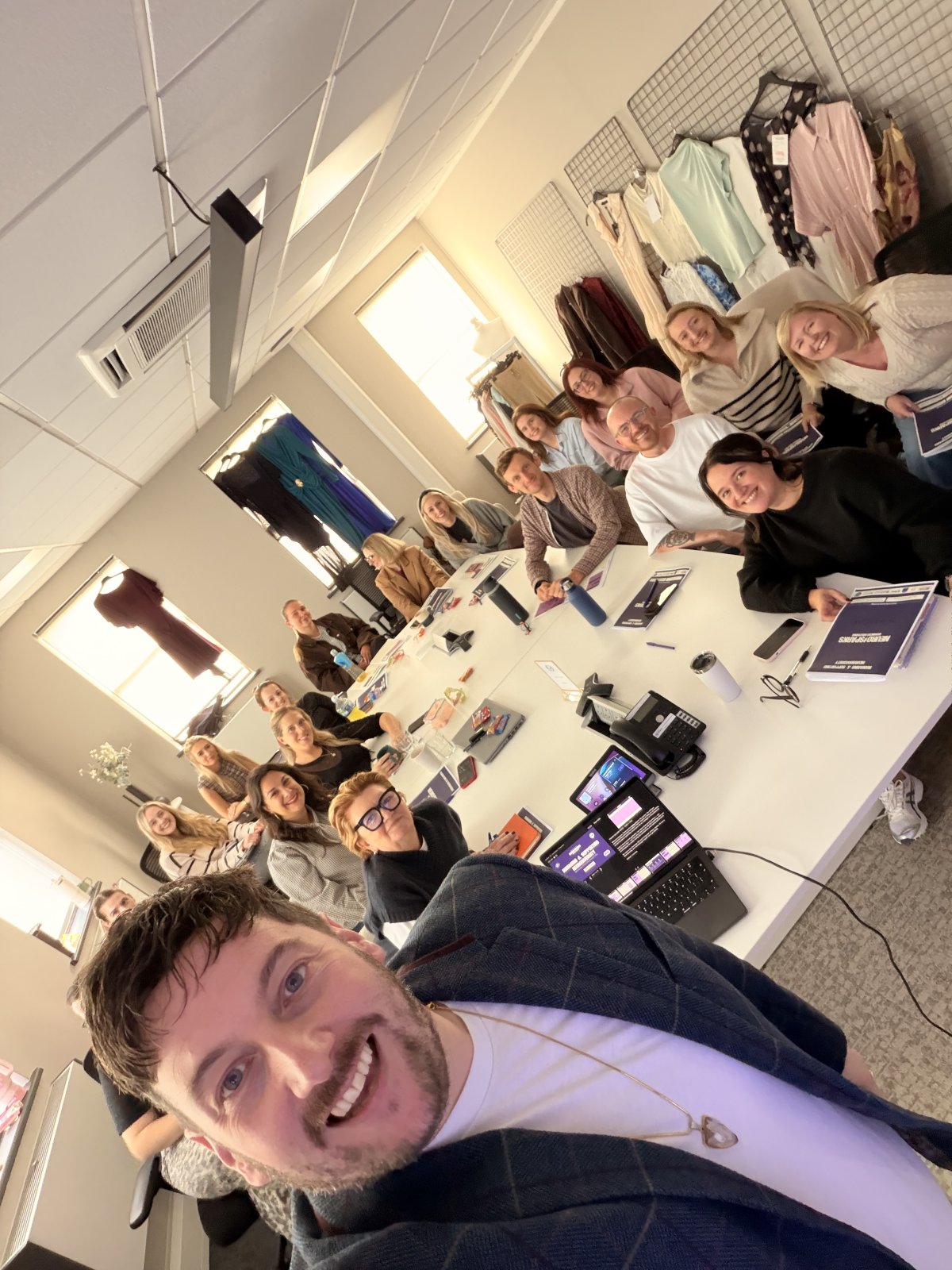
Neurodiversity training for managers explains how differences in communication, focus, information processing and working preferences can affect day-to-day work. It gives managers practical ways to adapt conversations, clarify expectations and support each person as an individual.
Training can cover profiles such as autism, ADHD and dyslexia, and explore how assumptions or unclear instructions may lead to avoidable friction; according to the UK Government, the Equality Act 2010 is relevant to employers’ responsibility to provide reasonable adjustments for employees with disabilities.
If you lead a team, this guide explains what manager training can cover, how clearer communication supports decision-making and retention, and why practical, tailored support matters across neurodivergent profiles. It also shows how to respond with curiosity rather than assuming that people with the same profile have identical needs.
Key Takeaways
- Learn what manager training can cover, from recognising different working styles to responding to individual support needs.
- Use clearer instructions and communication preferences to reduce avoidable misunderstandings at work.
- Explore how understanding neurodivergent strengths can inform team decisions and help create conditions that support retention.
- See when tailored coaching, workplace training or HR team support could help turn awareness into practical changes.
What is Neurodiversity Awareness Training for Managers?
Neurodiversity awareness training helps managers understand different ways people communicate, process information and approach tasks. It develops practical strategies for constructive conversations, support and reasonable adjustments at work.
Online training offers flexibility, while in-person sessions allow live discussion and practice together. Bespoke training can focus on your workplace situations and team needs. To choose a reputable provider, look for clear learning aims, practical examples and guidance managers can apply in everyday conversations.
Reasonable adjustments at work
Reasonable adjustments are changes that can reduce workplace barriers for an employee with a disability. They may relate to communication, the work environment or how tasks are organised, depending on the person’s needs and role. The Equality Act 2010 is the legislation identified as relevant to employers’ responsibility to provide reasonable adjustments for employees with disabilities, according to the UK Government.
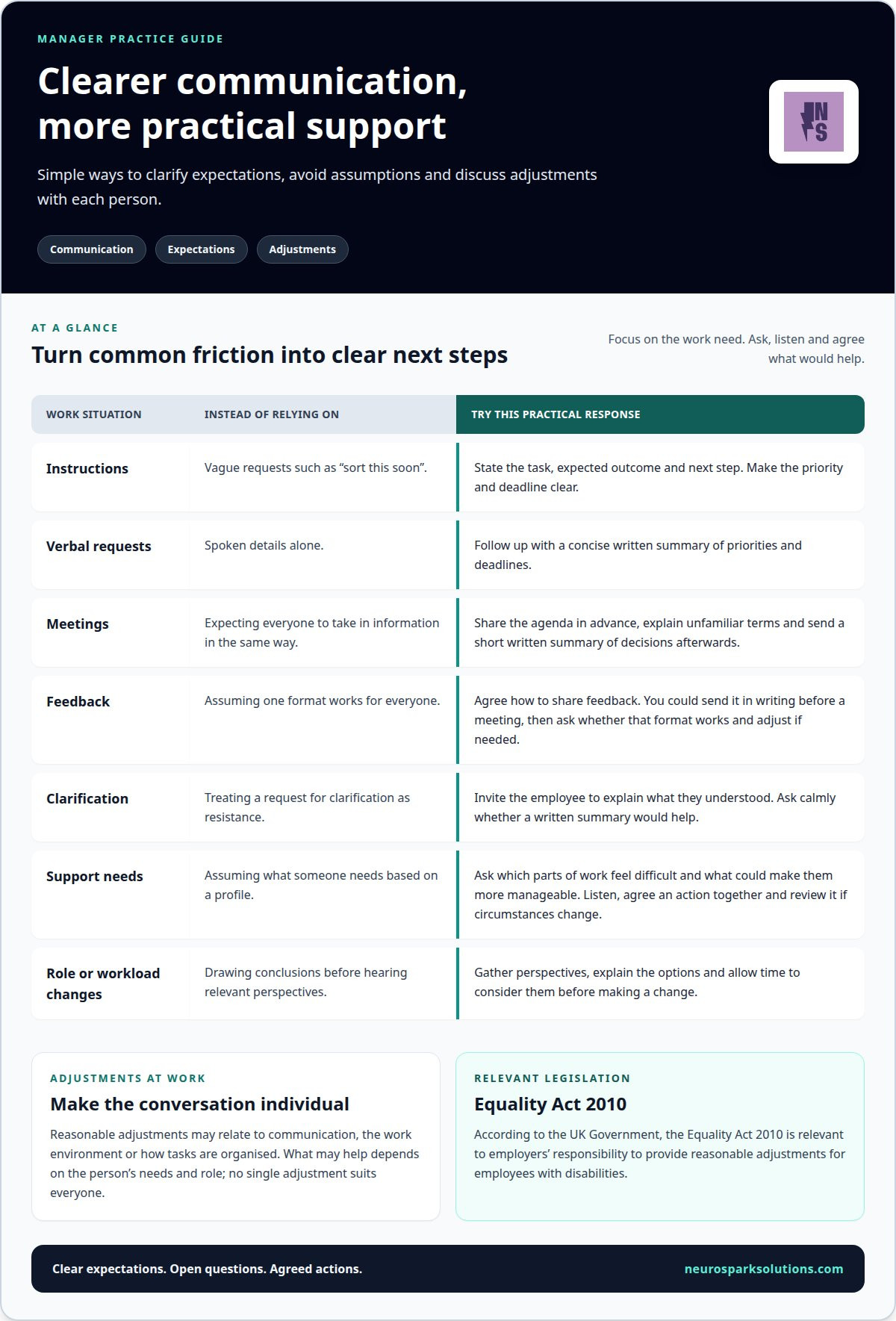
Training helps managers treat adjustments as a practical discussion, not an assumption about what someone needs. Ask which parts of work feel difficult and what could make them more manageable. Agree an action together, then review it if the role or circumstances change.
Manager tools and adjustment strategies
Useful approaches include clear written instructions, agreed ways to share feedback and planned check-ins. For example, follow a verbal request with a concise written summary of priorities and deadlines. These strategies can support neurodivergent colleagues, but no single adjustment suits everyone.
Constructive conversations make support easier to shape. Ask open questions, listen before trying to solve the problem, and clarify what would help with a specific task. Keep the discussion focused on work needs and practical options. Training can help managers recognise unclear expectations and agree adjustments with employees.
Communication and avoiding misunderstandings
Different communication styles can cause friction when expectations go unstated. Managers can reduce misunderstandings by making instructions clear and agreeing how employees prefer to communicate.
Communication techniques and strategies
Start with the task, expected outcome and next step. Replace “sort this soon” with a clear priority and deadline. Invite the employee to explain what they understood rather than treating a request for clarification as resistance. These changes can address communication challenges before they affect collaboration or performance.
Managers can agree how to share feedback, such as sending it in writing before a meeting. Ask whether the format works and adjust if needed. Understanding different working styles can improve collaboration and reduce misunderstandings, while awareness and accommodation can help prevent frustration across diverse teams.
Accessible communication
Accessible communication makes key information easier to receive and use. Share meeting agendas in advance, explain unfamiliar terms and follow up verbal decisions with a short written summary. This gives employees another way to process details and check what happens next.
Focus on the message, not just how it is delivered. A brief reply, limited eye contact or request for more processing time does not, by itself, reveal someone’s intent. Clarify calmly: “Would a written summary help?” This keeps the conversation focused on work rather than assumptions about behaviour.
Manager communication and leadership
Leaders set the tone through how they give instructions, respond to questions and handle differences. If a team member raises a communication difficulty, listen without judgement, ask what would make the exchange clearer and agree a practical change. Follow up to find out whether it helped.
Neurodiversity training for managers can offer guidance on adapting communication and management styles. If communication needs affect workplace access, explore Access to Work support as a possible next step.
Business performance, decision-making and retention
Assess the impact of manager training by comparing workplace practices before and after it. Track whether managers set clearer objectives, discuss support needs and follow through on agreed actions.
Effective performance management starts with clear expectations. Define the task, explain what a good outcome looks like and agree when to review progress. This gives employees a fair basis for discussing results, without relying on assumptions about pace, communication or behaviour.
Development conversations should cover strengths as well as challenges. Ask which tasks help an employee do their best thinking, then explore how those strengths could contribute to team goals. Someone who spots patterns quickly might support analysis, while a colleague who prefers detailed planning could help map project steps. Discuss preferences with the person rather than assigning them by profile.
Training can also help leaders make better-informed decisions. Before changing a role or workload, gather relevant perspectives, explain the options and allow time to consider them. A team discussion may benefit from written information alongside spoken contributions, giving people different ways to share ideas and bringing a wider range of thinking into organisational decisions.
To assess progress, review practical indicators such as completed check-ins, agreed adjustments and employee feedback on manager support. Examine performance conversations too: are objectives clear, are barriers discussed, and do agreed actions happen? These signs show whether awareness is informing everyday management, not just staying in the training room.
Retention and wellbeing are connected to the experience people have at work. If an employee’s performance changes, discuss workload, clarity and access to support before drawing conclusions. Managers can agree a development step, remove a specific barrier and set a follow-up conversation. Consistent attention to these details helps employees contribute and grow, while giving the organisation a clearer view of what supports sustainable performance.
Common profiles including autism, ADHD and dyslexia
Neurodiversity includes different ways of thinking, communicating and processing information. Autism, ADHD and dyslexia are among the profiles often covered in manager training. Around one in five people may identify with one or more neurodivergent identities, and one in seven UK employees is neurodivergent. These figures describe a broad group, not fixed traits. Two colleagues with the same profile may have different strengths, preferences and support needs.
An inclusive workplace gives people room to explain what helps them contribute. A team member with dyslexia might prefer written information in a clear, easy-to-read format. Someone with ADHD may find it useful to agree priorities and break a large task into smaller steps. Ask rather than assume, and focus on the work barrier or preference the person describes.
Psychological safety grows when employees can raise questions without being dismissed or judged. Managers can build confidence by responding calmly, keeping conversations respectful and addressing exclusionary behaviour. For example, invite contributions in different ways during a meeting, including spoken discussion and written follow-up. These everyday choices help build an inclusive culture and put equality into practice.
Inclusive recruitment and interviews matter too. Share the interview format and role expectations clearly, then give candidates a practical opportunity to show their skills. Structured questions help interviewers focus on relevant evidence rather than assumptions about eye contact, communication style or confidence. Agreeing reasonable adjustments for an interview can also help remove barriers to taking part.
Equality, diversity and inclusion work is strongest when recruitment, team culture and day-to-day support align. Review how candidates are assessed, how new employees are welcomed and how managers respond to different needs. Build practical skills for an inclusive workplace through tailored manager learning.
Neuro-Sparks training solutions: Neurodiversity coaching
Neuro-Sparks training solutions offers neurodiversity coaching to turn awareness into practical workplace support. It can help managers build confidence in conversations and support neurodivergent professionals with workplace challenges and goals.
When a team needs shared learning, workplace training can help managers develop more inclusive approaches. HR team support can help People teams consider how their processes work for different employees. The right next step depends on whether you need individual guidance, team learning or support with a specific workplace question.
Contact Neuro-Sparks training solutions to talk about the support that fits your needs.
Make inclusion part of everyday practice
Lasting change comes from the habits managers continue after training. Choose one team practice to improve, such as sharing priorities or inviting feedback, and build it into regular conversations. This gives people a clear way to explain what helps them work well and gives managers a practical basis for ongoing support.
Neurodiversity training for managers can be a starting point for more consistent workplace practice. Neuro-Sparks training solutions offers workplace training, assessments and HR team support. Its work is informed by Dan Armitage’s PG Cert in Neurodiversity and TAP accreditation. For teams across the country, the same focus on practical, tailored support can help turn learning into everyday action.
Contact Neuro-Sparks training solutions to discuss support for your team. Small, considered changes can make everyday work clearer and more inclusive.
Frequently Asked Questions
What is neurodiversity?
Neurodiversity describes the natural variation in how people think, learn, communicate and process information. It includes neurodivergent experiences such as autism, ADHD and dyslexia, alongside neurotypical ways of thinking. The term recognises difference rather than treating one way of processing the world as the standard. Experiences vary, so a label alone cannot tell you what support or working approach suits someone.
How do different roles in the workplace contribute to neuroinclusion?
Neuroinclusion depends on practical action across the workplace. Managers shape everyday team interactions, HR teams can consider how policies affect employees, and senior leaders can keep inclusion in view when making organisational decisions. Colleagues also contribute by respecting different communication preferences and challenging unfair assumptions. For example, a team can agree how to record meeting decisions while HR reviews whether its processes let people explain their needs.
What will you learn?
You’ll learn how people may approach tasks, communication and workplace routines differently. Training can help you practise asking supportive questions, responding constructively when someone raises a barrier and considering appropriate adjustments. You can also explore ways to make team expectations clearer. The aim is practical understanding you can apply to real conversations and decisions at work.
Who should attend?
Training is useful for managers who lead teams, allocate work or hold regular one-to-one conversations. HR and People professionals can strengthen their support for managers and employees, while senior leaders may benefit when shaping workplace culture or people processes. You don’t need to be a neurodiversity expert to take part. Openness to learning and adapting your approach is a useful starting point.
What does neurodiversity training for managers cover?
Training typically explores neurodivergent experiences at work and how managers can respond to individual needs. Topics may include autism, ADHD and dyslexia, workplace communication, reasonable adjustments, inclusive team practices and constructive support conversations. Practical examples help managers consider what to do when an instruction is misunderstood or a standard process creates difficulty, then identify a suitable response with the employee.
What are the benefits of neurodiversity training for UK managers?
Training can help UK managers understand workplace differences and respond thoughtfully to requests for support. It offers practical ways to clarify expectations, have sensitive conversations and consider adjustments in context. This can support consistent management across a team and help employees explain what enables them to contribute. It also gives managers a clearer basis for working with HR on individual or team needs.