



Access to Work may fund work-related ADHD coaching, specialist equipment or software, a support worker, or help with travel. Access to Work grant application help for ADHD can make it easier to explain which support could address your needs at work. A needs assessment considers how ADHD affects your role and what practical support may help, with recommendations tailored to your circumstances. If you’re unsure how to describe workplace barriers, this guide explains what support may be covered, how to apply, what to prepare and what to expect from the assessment.
Key Takeaways
- Find out whether your age, location and work situation fit the scheme’s eligibility rules.
- Explore practical support that may help with ADHD-related barriers at work, from equipment to coaching.
- Prepare the key details for an online or telephone application so you can explain the support you need.
- Learn what the needs assessment may consider and how workplace training or Access to Work support could help put practical changes in place.
Can someone with ADHD get Access to Work?
Yes. Employees, self-employed people and people about to start paid work can apply if ADHD affects their work. In England, Scotland and Wales, the UK government scheme is open to applicants aged 16 or over, according to the Department for Work and Pensions.
Check eligibility before applying
- Check where you live and work. Access to Work applies in England, Scotland and Wales; Northern Ireland has a separate scheme. The Department for Work and Pensions says you may qualify if you’re about to start or return to paid work in the next 12 weeks.
- Check how your work situation fits the scheme. You can apply as an employee, a self-employed person or someone preparing to start a job. Part-time hours, flexible arrangements and working from home do not automatically rule you out. Your home can count as your workplace if you work there some or all of the time.
Access to Work helps people with a disability or health condition get into work or stay in work. Eligibility depends on whether your condition is likely to affect you for 12 months or more and how it affects your ability to work.
Consider diagnosis and grant amount
- Explain how ADHD affects your work, whether or not you have a diagnosis. You do not need a diagnosis to apply. Be ready to describe specific effects on your tasks, communication or working environment, and the support that could help. An assessor may discuss these needs with you later.
- Apply before paying for support. Funding is valid from the date you submit your application, so paying beforehand may leave you unable to claim that support. The maximum grant for awards in England, Scotland and Wales made between 1 April 2025 and 31 March 2027 is £69,260 per person per year.
Before applying for Access to Work, gather examples of how ADHD affects your work and what support could help. This gives you a clear starting point for discussing your needs with an assessor.
What support can the Access to Work grant cover?
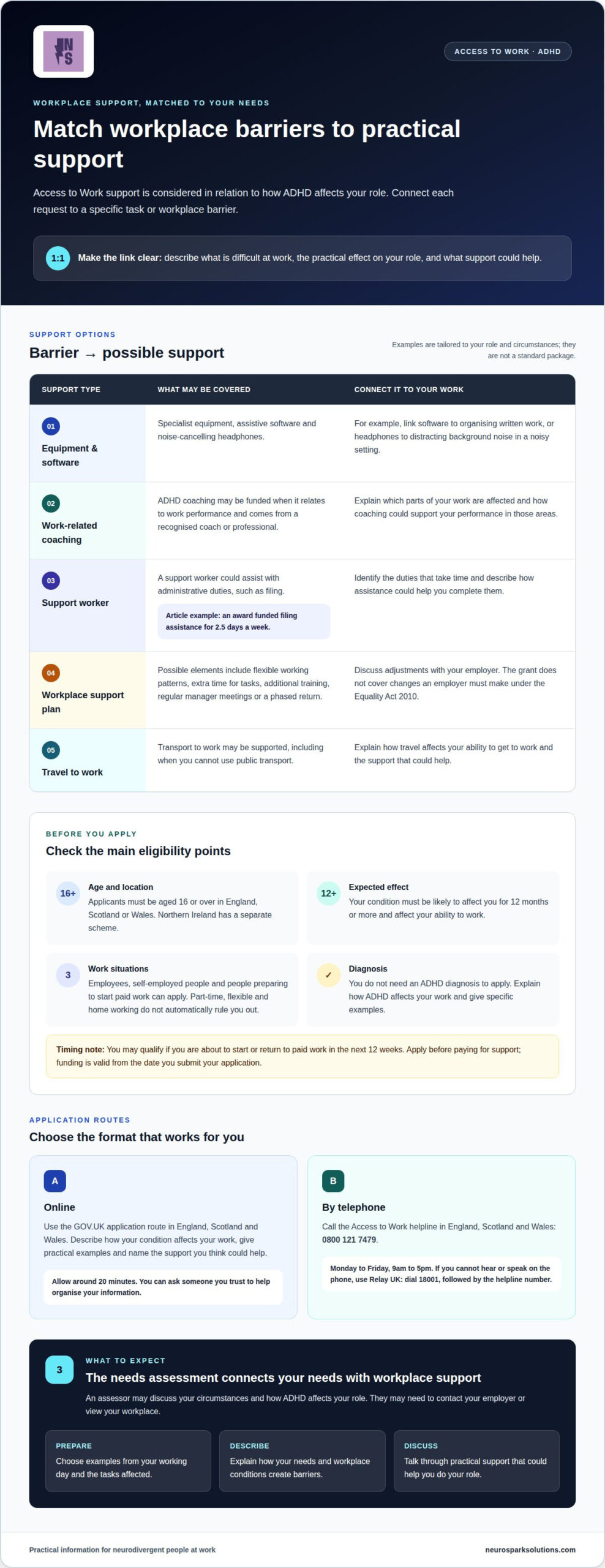
Link each request to a specific work task affected by your disability or health condition. Access to Work support can be tailored to your role and workplace, rather than provided as a standard package.
- List the work barriers you want support to address. For example, you could describe difficulty concentrating in a noisy setting or explain how needing to move affects your ability to take part in long meetings. These examples show how ADHD relates to your work. Explain the practical effect on your role, since support is based on your needs.
- Identify equipment or software that could help. Possible support includes specialist equipment, assistive software and noise-cancelling headphones. Note which task each item would support, such as using software to organise written work or headphones to reduce distracting background noise. A clear link to your work helps explain your request.
- Consider coaching or administrative assistance. ADHD coaching may be funded when it relates to work performance and comes from a recognised coach or professional. A support worker could also help with tasks such as filing; one example of an award funded filing assistance for 2.5 days a week. Explain which duties take time and how support would help you complete them.
- Discuss a workplace support plan with your employer. Possible elements include flexible working patterns, extra time for tasks, additional training, regular manager meetings or a phased return. Access to Work may also help with transport to work, including when you cannot use public transport. In Scotland, as elsewhere in the scheme, discuss your work needs and proposed adjustments with your employer. The grant does not cover changes an employer must make under the Equality Act 2010.
Prepare examples before you submit your request. For practical Access to Work support, a focused discussion can help connect your work barriers with suitable support.
Applying online or by telephone
In England, Scotland and Wales, apply through GOV.UK or by calling the Access to Work helpline. Northern Ireland has a separate scheme, so use its application route. Access to Work grant application help for ADHD can help you prepare a clear account of your needs before applying.
-
Choose an application route
Choose the online form if writing down your needs suits you, or apply by telephone if speaking is easier. The application takes around 20 minutes, so allow time to explain how ADHD affects your work and what support could help. Before starting, note relevant tasks, examples of barriers and adjustments you want to discuss. You can also ask someone you trust to help organise your information.
-
Apply online through GOV.UK
Start your application through GOV.UK and explain how your condition affects your work. Give practical examples, such as difficulty organising tasks, using workplace software or managing changes in routine. Describe the support you think would help you do your role. If you’re employed, you may provide a workplace contact to confirm your employment. They won’t be contacted without your permission. Apply before paying for support.
-
Find help applying in your UK nation
For England, Scotland and Wales, apply online or call the Access to Work helpline on 0800 121 7479. It is open Monday to Friday, from 9am to 5pm. If you can’t hear or speak on the phone, use Relay UK: dial 18001, followed by the helpline number. Northern Ireland has a separate Access to Work scheme and application route.
If you want Access to Work grant application help for ADHD, prepare your work examples and support needs before using either route. You can also discuss your needs with your employer, who may help explain your role and existing adjustments.
The Access to Work needs assessment
Use the needs assessment to connect your disability or health condition with practical support at work. The assessor may discuss your circumstances, how ADHD affects your role, and whether they need to contact your employer or view your workplace.
- Prepare examples from your working day. Choose specific tasks where the interaction between your needs and workplace conditions creates barriers, such as switching between priorities, keeping track of instructions or completing administrative work. Explain what happens, when it happens and how it affects your work. In England, Scotland and Wales, the assessment considers your needs, so clear examples can help focus the discussion.
- Link each barrier to a possible adjustment. If organising tasks is difficult, you might discuss assistive software or coaching related to work performance. If a shared office distracts you, explain how the setting affects your concentration and discuss specialist equipment. These are options to explore, not guaranteed approvals. The assessor considers what could address your work-related needs.
- Plan how employer involvement could help. An assessor may contact your employer or request to view your workplace. Consider which details could help explain your role, such as your tasks, working arrangements or existing adjustments. Prepare examples of what already helps and where you still need support. This keeps the discussion grounded in your actual working conditions.
- Describe the outcome you need. Focus on practical changes that could help you carry out your role, rather than listing ADHD traits alone. For example, explain whether coaching could support your work planning or equipment could reduce a specific barrier. Mental health support is a distinct type of workplace support, so describe your work needs clearly and let the assessment consider suitable options.
The key takeaway: make the connection between your needs, work tasks and proposed support clear. If you want help preparing for this conversation, get Access to Work support tailored to your workplace needs.
Neuro-Sparks training solutions: Workplace training
Neuro-Sparks training solutions provides Access to Work support to help people navigate the process and turn workplace needs into practical support. Its workplace training can also help colleagues and managers understand how to work inclusively with ADHD.
For employers, HR team support can help address workplace questions and consider how agreed adjustments fit existing processes. Assessments can also help inform workplace support. These services may be useful when an individual’s needs are clear but putting supportive ways of working into practice calls for input from the wider team.
To discuss workplace training or Access to Work support for your situation, contact Neuro-Sparks training solutions.
Turn your next step into practical workplace support
Once you have a clearer picture of the support you need, consider how it could work day to day. Connect individual needs with workplace routines, communication and the understanding of managers and colleagues. This keeps the focus on meaningful changes, not just completing an application.
If you need access to work grant application help for ADHD, Neuro-Sparks training solutions provides Access to Work support. Workplace training can help teams build practical understanding, while HR team support can help employers consider workplace processes. Assessments can also inform support needs. These services can help you move from identifying a barrier to planning how people can work together to address it.
Neuro-Sparks training solutions’ team brings neurodiversity knowledge to its work with individuals and organisations. If you’d like to discuss what could help in your workplace, contact Neuro-Sparks training solutions. A considered next step can help you shape a more supportive way of working.
Frequently Asked Questions
What happens after I apply?
The stated target for an Access to Work decision is 25 working days, and the approval process can take up to 3 months. While you wait, keep a copy of your application and note any changes to your role or working arrangements. If your duties change, those details could help explain whether the support requested still matches your work situation.
Can I apply for Access to Work if I work from home?
Yes. If your role is hybrid, describe which duties you do at home and which you do elsewhere. For example, written tasks may be manageable at home while collaborative work in an office calls for different support. Separating settings and tasks can make it easier to explain how your working arrangements relate to the support you’re seeking.
Do you need an ADHD diagnosis to apply?
No. You don’t need to wait for a diagnosis before applying. Describe the work tasks affected and the practical support you’re seeking. If you’re employed, you can choose to provide a workplace contact to confirm your employment. They won’t be approached without your permission, so you can decide whether to include them.
Reasonable adjustments vs Access to Work: what’s the difference?
Reasonable adjustments are an employer’s responsibility when the Equality Act 2010 applies; Access to Work does not fund changes the employer must make under that law. The National Archives records the Equality Act 2010 as the legal basis for this duty. In practice, separate the workplace changes your employer must make from any additional support you’re asking the grant to fund.
What if you’re not happy with the decision?
You’re entitled to one reconsideration by a different case manager if you disagree with an Access to Work decision. Identify the part you want reconsidered and explain why, using relevant details about your work and requested support. Keep your explanation focused on the decision so the case manager can understand what you think was missed or misunderstood.
What evidence is required?
The evidence needed depends partly on your work situation. If you’re self-employed, you’re asked to provide your Unique Taxpayer Reference. If you’re employed, you may give a workplace contact who can confirm your employment, but they won’t be contacted without your permission. Keep your application details accurate and make sure any employment information reflects your current work arrangements.