



What if better team performance starts with changing how work is organised, rather than expecting everyone to work in the same way?
Neurodiversity describes natural differences in how people think, process information, communicate and experience the world. Neurodivergent people may bring different strengths and have different support needs. For anyone responsible for a team, awareness is a useful starting point, but practical understanding matters too: everyday communication, meetings, sensory environments and expectations can all affect how comfortably people participate and do their work.
Neurodiversity training for staff helps colleagues, managers and leaders recognise where workplace practices create friction and explore more inclusive ways of working together. This article explains what neurodiversity means, how training can support whole organisations, teams and staff networks, and how tailored learning can support neurodivergent employees without making assumptions about individual needs.
Key Takeaways
- Spot everyday workplace barriers and consider practical adjustments to communication, meetings and working environments.
- Support staff with dyslexia, dyscalculia and autism by asking about individual needs rather than relying on assumptions.
- Use training to help managers and colleagues turn awareness into more inclusive workplace practices.
- Shape learning for different groups, so teams, leaders and staff networks can apply it to their roles.
How does workplace neurodiversity training work?
Effective training connects understanding with practical changes to everyday work. It helps teams turn awareness into inclusive habits, from clearer instructions to more thoughtful meeting arrangements.
Practical workplace adjustments
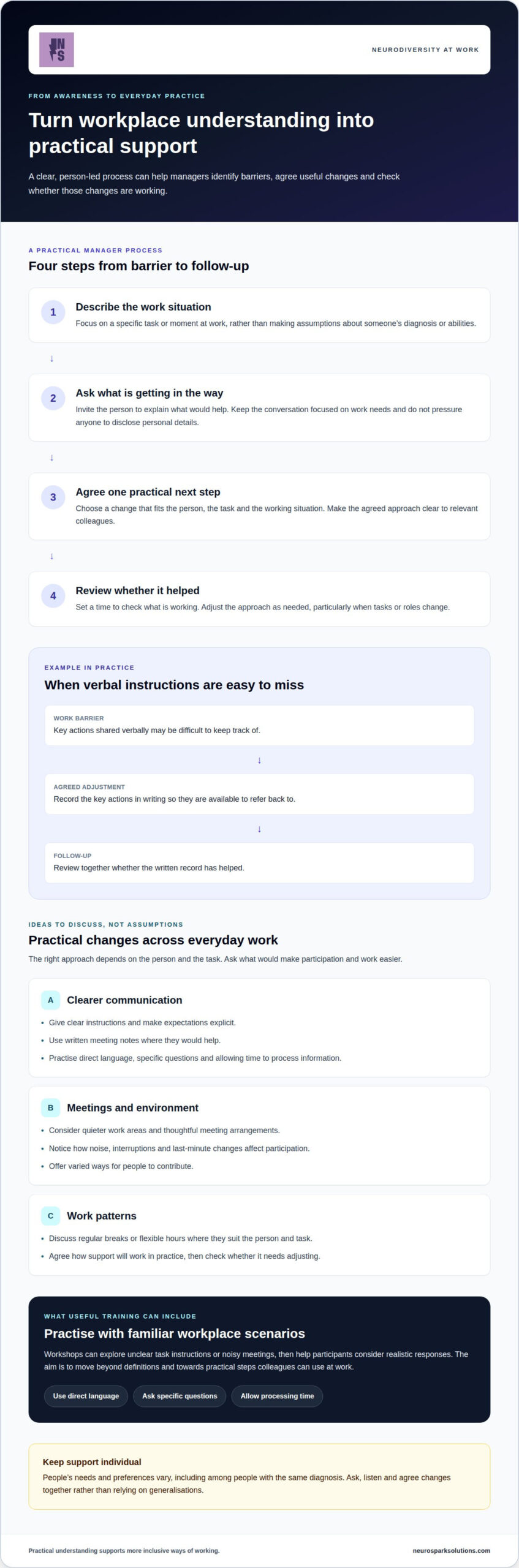
Training can help managers identify adjustments that address specific workplace barriers. Written meeting notes, for example, can help someone who finds it difficult to listen and take notes at the same time. Clear instructions, quieter work areas, regular breaks or flexible hours may also help, depending on the person and task. Regular check-ins give managers a chance to ask what is working and whether practices need adjusting, without pressuring anyone to disclose personal information.
For funding, the Department for Work and Pensions describes Access to Work as a government scheme that helps disabled people get or stay in work. It may be a relevant support route for an individual employee; it should not be presented as a guaranteed grant for team training.
Awareness training and events
Workshops and workplace events can use familiar scenarios, such as unclear task instructions or noisy meetings, to help staff consider different working styles and practical responses. Useful sessions move beyond definitions: participants practise using direct language, asking specific questions and allowing time to process information. UK providers vary in audience, format and depth, so compare whether their learning includes realistic workplace examples and actionable steps, rather than awareness alone.
Poor training can reinforce stereotypes, encourage unwanted disclosure or leave staff without practical changes. If examples overlook individual differences, colleagues may rely on assumptions instead of listening to each person.
Employee experiences and inclusion
A neurodivergent employee may mask at work by hiding differences to fit expectations, sometimes without recognising it. Masking can leave someone exhausted or isolated. Training helps colleagues notice how workplace culture, interruptions and unwritten expectations affect participation, without assuming everyone has the same experience.
Inclusion also means recognising skills and reducing unnecessary friction. A quiet space, structured instructions or varied ways to contribute can help more colleagues take part. The Equality Act 2010 may apply where neurodivergence amounts to a disability; according to the UK legislation register, disabled employees have protection from disability discrimination and a right to reasonable adjustments.
What skills and attributes do neurodivergent staff bring?
Neurodivergent employees bring individual skills, perspectives and ways of approaching tasks. These vary from person to person, even among people with the same diagnosis or similar experiences. Managers get a clearer picture by focusing on each person’s work, interests and goals, rather than assuming a condition guarantees a particular strength. For example, discuss which tasks someone enjoys and where clearer information could help.
Support should match the task and the individual. A colleague with dyslexia may benefit from more time to read instructions or complete written work. For someone with dyscalculia, managers can discuss whether written figures, worked examples or another way to check calculations would help. Autistic employees also have varied preferences, so ask about communication, sensory needs and meeting expectations instead of relying on generalisations.
Constructive conversations make support specific. A manager can describe the work situation, ask what is getting in the way, then agree on a practical next step. If verbal instructions are easy to miss, for instance, both people might agree to record key actions in writing. Set a time to review whether the change helped. Keep the conversation focused on work needs, without pressuring anyone to share personal details.
Manager learning can turn these conversations into consistent support across a team. A workplace neurodiversity training session can explore how different communication styles affect feedback, deadlines and collaboration. Managers can practise giving one clear request at a time, allowing processing time and discussing adjustments respectfully. Employees benefit when agreed approaches are understood by relevant colleagues and reviewed as roles change. For practical workplace training guidance, focus on examples your managers can apply to real tasks.
Employer training on neurodiversity and neurodivergence
Useful training gives managers and colleagues strategies they can apply in everyday work. It connects respectful understanding with changes to communication, team practices and organisational culture.
Empathy and collaboration
A session can help neurotypical colleagues consider how common workplace habits affect others. For example, a manager might explore how last-minute changes, indirect feedback or group discussions create barriers for some autistic employees. Participants can practise making expectations explicit and inviting different ways to contribute. The aim is not to ask colleagues to speak for every neurodivergent person, but to build curiosity and respectful collaboration.
Benefits for managers and employees
Managers gain practical strategies for discussing work needs, agreeing support and following up. This can make it easier to recognise an employee’s strengths without assuming a diagnosis predicts their skills. One colleague may excel at spotting detail, while another may prefer a different route to the same outcome. Clear expectations and thoughtful adjustments help teams make better use of individual contributions.
For an organisation, consistent approaches can help create a culture where employees feel able to discuss barriers early. Retention depends on many workplace factors, so training alone cannot explain or ensure it. However, managers who understand how to respond can make day-to-day support more consistent and help employees participate fully.
Measuring training impact
Measure practical changes, not just attendance or satisfaction after training. Before delivery, identify relevant indicators, such as whether managers discuss adjustments, provide written follow-ups or make team meetings easier to access. Afterward, review those indicators through manager and employee feedback, and examples of changed practice. Protect privacy by collecting only information needed to assess workplace changes, and don’t require employees to disclose neurodivergence.
Set a review point and compare what managers intended with what teams experience. If written task summaries were introduced, ask whether colleagues can find and use them. If feedback reveals gaps, update the organisation’s strategies and reinforce them in future sessions. This makes impact a continuing part of workplace learning, rather than a one-off event.
Training for whole organisations, teams, leaders and staff networks
Workplace learning can reach everyone while giving leaders and staff networks space to address role-specific needs. A useful programme connects awareness with changes people can apply in their own working environment.
UK workplaces can use introductory neurodiversity foundations, practical team workshops, manager-focused sessions and tailored organisation-wide training. Live sessions and self-paced e-learning offer different ways to take part. The right mix depends on your goals, team structure and whether colleagues need shared foundations or guidance for particular responsibilities.
Whole-organisation learning gives colleagues shared language for discussing different thinking and working styles. A team session can use a familiar process, such as handing over tasks, to explore where instructions or expectations could be clearer. Leaders can then consider how policies and everyday decisions support participation. Staff networks can contribute lived perspectives without being expected to represent every neurodivergent colleague.
For managers, learning can focus on conversations about support, responding to requests and putting agreed reasonable adjustments into practice. For wider teams, it can address inclusive communication and collaboration. Tailored training can reflect an organisation’s workplace dynamics and industry requirements, so examples feel relevant rather than abstract. Accessible learning materials and clear session expectations also help colleagues engage in ways that suit them.
Plan the programme around a practical outcome. You might want leaders to review meeting practices, managers to handle support conversations more confidently, or teams to improve shared processes. Set that aim before choosing a format, then reinforce the learning through follow-up discussions. Awareness is a starting point; changed workplace habits are the goal.
For a programme shaped around your organisation’s needs, explore tailored workplace training and plan learning for your teams, leaders and staff networks.
Neuro-Sparks training solutions: Neurodiversity coaching
Neuro-Sparks training solutions offers neurodivergent coaching for people seeking practical support with work. Coaching can help you explore your working style, communication needs and strategies for everyday challenges. It may suit you when general workplace learning has raised useful questions, but you want to focus on your own goals and circumstances.
For organisations, workplace training helps teams turn awareness into shared practices, while HR team support helps address workplace questions. Neuro-Sparks also provides assessments to identify appropriate workplace adjustments and support. These services meet different needs: coaching focuses on an individual’s experience, while training supports learning across a workplace.
To discuss the right support for your situation, contact Neuro-Sparks training solutions.
Turn learning into lasting workplace practice
Choose one workplace practice to improve next, then give it clear ownership. You might focus on how managers set expectations, how teams share information or how staff networks contribute to decisions. Neurodiversity training for staff can support this work when learning connects with everyday responsibilities and continues beyond a single session.
Turn that aim into a practical next step: decide who will lead it, what change they’ll introduce and how colleagues can share feedback. Neuro-Sparks training is delivered by a CEO who is TAP Accredited and holds a PG Cert in Neurodiversity. This expertise helps keep workplace learning grounded in practical understanding.
Start a conversation about what would be useful for your organisation. Contact Neuro-Sparks training solutions to discuss your next step, and keep building a workplace where people can contribute in ways that work for them.
Frequently asked questions
What is neurodiversity?
Neurodiversity recognises differences in how people think and process information as part of human diversity. One person may have more than one type of neurodivergence, sometimes described as co-occurring conditions. A colleague’s needs or strengths therefore can’t be inferred from one label. Useful workplace support starts with their own account and the demands of their role.
How does this training support managers in meeting legal, HR, and organisational expectations?
Training can help managers understand workplace responsibilities and respond more consistently to requests for support. Where neurodivergence amounts to a disability, the Equality Act 2010 gives disabled employees protection from disability discrimination and the right to reasonable adjustments, according to the UK legislation register. Learning can help managers put these expectations into practice, while HR teams can use it to inform workplace processes.
What is Neurodiversity Awareness Training for Managers?
It is workplace learning that helps managers understand neurodiversity and apply that understanding in their role. A session can help a manager consider how to discuss work expectations, respond to a support request and coordinate next steps with HR. It gives managers space to practise respectful conversations and consider how their decisions affect an employee’s participation and day-to-day experience at work.
What training formats are available?
Neuro-Sparks offers live workplace training and in-house sessions for organisations. Sessions can support individual learning or bring a team together around shared workplace aims. An in-house session, for example, can give colleagues a common starting point, while live training provides a structured learning setting. The intended audience and learning goals help shape the relevant format.
How do I get started?
Start by describing what you want the training to change at work. You might want managers to feel more prepared for support conversations, or teams to improve how they share information. Include who needs to take part and any workplace situations you want the learning to address. Then contact Neuro-Sparks training solutions to discuss workplace training for your organisation.
How long does the training session last?
Session length depends on the scope, format and learning goals. A focused session might address one workplace challenge, while broader organisational learning may need time for shared foundations and practical discussion. Before arranging training, identify the outcomes participants need to work towards. This helps shape a session with enough time for relevant examples, questions and reflection, rather than trying to cover too much at once.