
Rugby is for every kind of brain, and every kind of person.
At Typhoons, we’re proud to be one of the first clubs in the region putting neurodiversity and LGBTQ+ inclusion on the same page, because for a lot of our members, they’re not two separate conversations at all.
1 in 5 people
are neurodivergent
37%
of LGBTQ+ people have faced discrimination while exercising.
76%
of LGBTQ+ people have experienced mental health difficulties, versus 44% of the general population.
Transgender and gender-diverse adults are
3-6 times more likely
to be neurodivergent
Why neurodiversity and LGBTQ+ inclusion go together
The overlap is bigger than most people realise
Around 1 in 5 people are neurodivergent in some way, whether that’s autism, ADHD, dyslexia, dyspraxia or another way of thinking and processing the world. Autism alone affects more than 1 in 100 people, and ADHD is estimated to affect 3 to 4% of UK adults.
What’s less widely known is how strongly neurodivergence and LGBTQ+ identity overlap. A University of Cambridge study of over 600,000 UK adults found that transgender and gender-diverse people were 3 to 6 times more likely to be autistic than the cisgender population. Research into autistic adults has found that up to 18% of autistic men and 43% of autistic women identify as a sexual minority, and one 2024 US study found LGB teenagers were over five times more likely to meet the criteria for ADHD than their peers.
Nobody fully agrees on why the overlap is so strong, but one of the leading explanations is straightforward: neurodivergent people are often less bound by unwritten social scripts and expectations, which can make it easier to question assumptions about gender and sexuality that other people never stop to examine. It’s not that one causes the other. It’s that both are part of the same broader story about thinking, and being, differently.
And both groups still face real barriers in sport
A January 2026 Stonewall survey found that 37% of LGBTQ+ people have experienced discrimination while exercising, and a third feel their sexual orientation is a barrier to taking part in sport at all. Partly as a result, 45% of LGBTQ+ people don’t meet the recommended levels of physical activity, and 76% report having experienced mental health difficulties, compared with 44% of the general population.
Neurodivergent people can face similar friction in sporting environments that aren’t set up with them in mind: unclear instructions, sensory overload, or coaching styles that assume everyone processes information the same way. Yet physical activity is one of the most effective, low-cost tools we have for supporting neurodivergent wellbeing. Movement helps regulate focus and restlessness for people with ADHD, provides sensory grounding and reduces anxiety for autistic people, and gives everyone a sense of routine, structure and belonging.
Put simply: a club that gets both of these things right removes two sets of barriers at once, for a lot of the same people. That’s exactly what this training is about.
About the training: Neurodiversity Foundations
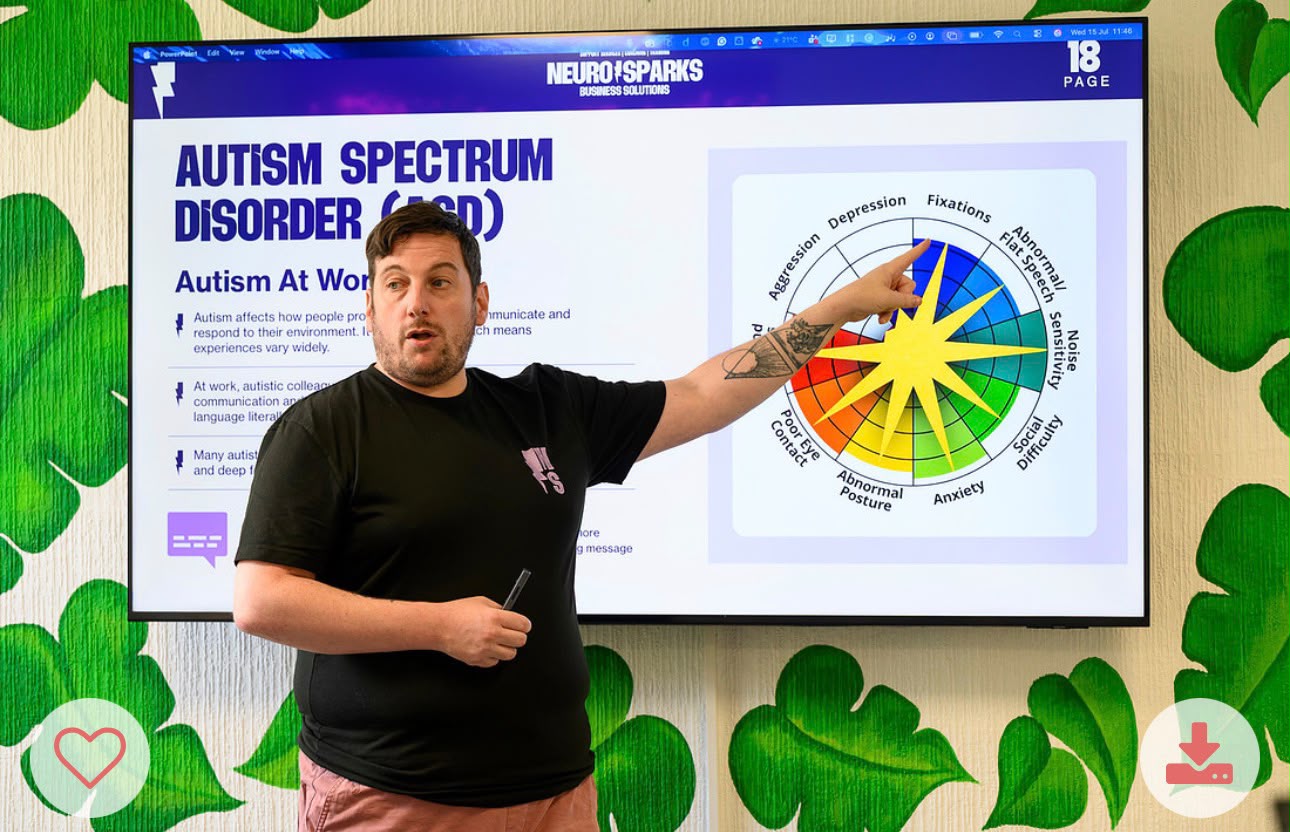
Delivered by Dan Armitage here at Neuro-Sparks, this session gives coaches and committee members a clear, practical grounding in neurodiversity, built specifically around what it means for coaching and club life rather than abstract theory.
- What neurodiversity actually means, covering autism, ADHD, dyslexia, dyspraxia and more as different, not lesser, ways of thinking.
- What it looks and feels like in practice, drawn from real lived experience rather than textbook definitions.
- Practical, usable strategies for communication, instructions and feedback that work for a wider range of players and volunteers.
- How to recognise when someone needs a different approach, and the confidence to know what to actually do about it.
The session is designed to be accessible and interactive rather than a lecture, and by the end, coaches and committee members should feel noticeably more confident supporting neurodivergent players, teammates and each other, on and off the pitch.