


In-house workplace neurodiversity training can be tailored to your workplace and team. It can help staff understand how neurodivergent colleagues may bring strengths such as fresh perspectives and focused problem-solving, while building clearer communication and awareness of sensory needs. Useful sessions connect these topics to practical workplace adjustments and ways to carry learning into everyday work.
Key Takeaways
- Recognise how different ways of thinking can benefit workplace problem-solving, then build inclusion into everyday team practices.
- Use interactive activities to explore workplace situations and practise more supportive responses.
- Consider how communication preferences and sensory environments affect people, and identify practical ways to reduce barriers.
- Choose tailored training when your team needs shared understanding and practical ways to make neuroinclusion part of its working culture.
What skills do neurodivergent staff bring to the workplace?
Neurodivergent staff have varied skills and approaches; there is no single profile. One colleague may spot patterns in complex information, while another may bring original ideas or sustained focus to detailed tasks. These differences can support problem-solving, quality checks and creative work when people have suitable conditions to contribute.
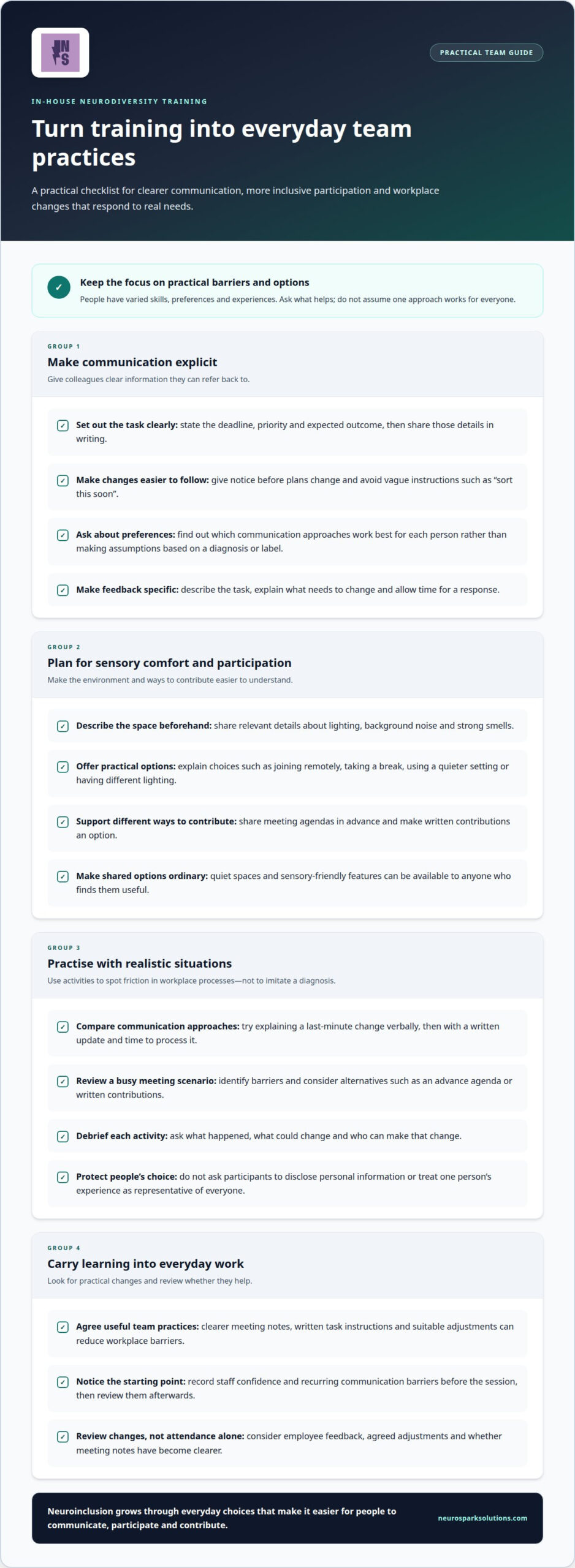
Neuroinclusion means shaping everyday workplace culture, not singling out individuals. Managers can share meeting agendas in advance, provide written follow-ups and make quiet spaces available to anyone who needs them. Treat these as useful options for the whole team, rather than special treatment reserved for particular people.
Workplace environments can affect concentration and comfort. Sound, lighting, temperature, crowding, proximity to others, enclosed or open spaces, patterns, colours and textures may all create challenges. Explain room features before meetings, and make options such as a quieter desk or different lighting part of ordinary workplace conversations.
In the UK, employers’ reasonable-adjustment responsibilities are set out in equality law. Discuss workplace barriers with the individual and consider suitable changes, such as written instructions or a quieter work area.
To measure training’s impact, note staff confidence and recurring communication barriers before the session, then review them afterwards. Track practical changes, such as clearer meeting notes, agreed adjustments and employee feedback, rather than relying on attendance alone.
Common pitfalls include treating all neurodivergent people alike, presenting strengths as guaranteed, or raising awareness without changing workplace practices. Don’t ask individuals to disclose personal information in group exercises. Use realistic examples, such as providing written task instructions, and let participants practise respectful responses.
Practical training can help managers turn understanding into everyday approaches. A team-planning exercise, for example, can explore different ways of processing information before managers identify a change to meeting communication. Explain that quiet rooms and sensory-friendly features are available to all staff, so colleagues can choose what supports their work.
Interactive role-play and experiential activities
Role-play can turn general guidance into practice. A facilitator might ask one person to explain a last-minute change verbally, then repeat the exercise with a written update and time to process it. Participants can discuss how each approach feels and what makes the task clearer. The aim is not to imitate a diagnosis or stereotype an individual. Instead, notice where workplace processes create friction and practise strategies that make communication easier.
Experiential activities can explore adjustments without asking anyone to disclose personal information. A small group could review a busy meeting scenario, identify barriers and suggest alternatives, such as sharing an agenda beforehand or allowing written contributions. Participants can then practise offering those options respectfully. This keeps the focus on practical changes, rather than treating one person’s experience as representative of everyone.
Training grounded in lived experience can bring real workplace situations into the room, including the effort involved in requesting adjustments or interpreting unclear instructions. A trainer should explain how personal examples are shared, protect individuals’ choice to participate, and connect each story to useful actions. To choose a UK provider, look for relevant workplace expertise, respectful use of lived experience and activities that lead to practical strategies. Ask how the course helps managers apply learning to communication, processes and adjustments.
After each exercise, allow time to reflect: what happened, what could change, and who can make that change? For instance, a role-play about feedback might lead a team to give specific examples in writing and agree a follow-up conversation. This debrief helps translate experiences into actions without claiming one approach works for everyone. If your team needs practical sessions tailored to its workplace, explore workplace neurodiversity training.
Communication and sensory needs
Neuroinclusive communication makes expectations easier to understand without assuming everyone processes information in the same way. When assigning a task, for example, a manager can state the deadline, priority and expected outcome, then share those details in writing. This reduces guesswork and gives colleagues a reference point during the working day. Ask each person which communication approaches work best for them, rather than making assumptions based on a diagnosis or label.
Sensory needs can affect how comfortable and focused someone feels at work. A meeting room’s lighting, background noise or strong smells may create challenges, even when colleagues are concentrating on the same discussion. Before a session, share practical details about the space and explain options such as joining remotely or taking a break. These choices support inclusive participation without requiring anyone to share personal information with the group.
Agree simple communication strategies with the team. Managers can give notice before changing plans, avoid vague instructions such as “sort this soon” and invite questions through a preferred channel. In a feedback conversation, describe the specific task, explain what needs to change and allow time for the employee to respond. Clear steps make feedback more useful and reduce the chance of misunderstanding.
Awareness sessions should connect differences to practical workplace actions, not present autism or any other form of neurodivergence as a single experience. Use realistic scenarios, such as a busy open-plan office or a fast-paced meeting, and ask what adjustments could help. Discuss how a quieter setting, written prompts or a predictable agenda might help someone contribute their strengths. Focus on work barriers and solutions, not assumptions about mental health or an individual’s abilities. The team can then agree which changes to try and review how well they support communication, comfort and participation.
When in-house neurodiversity training is useful
Bring a team together when employees need shared ways to support neurodivergent colleagues. If managers give conflicting instructions or handle adjustments inconsistently, for example, a tailored session can help them agree practical approaches. In-house neurodiversity training is especially useful when workplace examples matter, such as improving team meetings, onboarding or feedback conversations.
Training can also help after a change in working practices. Hybrid meetings, a new team structure or updated processes may create fresh barriers. Sessions give colleagues a chance to discuss realistic scenarios and practise responses they can use at work. The outcome should be more than greater awareness: employees can leave with agreed steps, such as sending agendas in advance or providing written follow-ups.
In-house sessions suit organisations that want to discuss their own working environment. Online courses can work well for flexible, self-paced learning or introductory information. Neither format is automatically better; choose according to whether your priority is team practice, shared discussion or individual flexibility. A blended approach can combine an online introduction with a facilitated session focused on workplace situations.
How long an in-house session takes depends on the topics, activities and time needed for discussion. Match the duration to the learning goals rather than using a fixed template. A session covering basic awareness, for instance, needs a different structure from one that includes manager practice and planning adjustments.
Before arranging a session, identify the workplace challenge, who needs to take part and what you want to happen afterwards. Link each activity to a real process, such as clearer task allocation or a consistent way to discuss adjustments. This gives your team a practical basis for reviewing the training’s impact.
If your organisation is ready to build shared skills around its own workplace needs, arrange tailored workplace training.
Neuro-Sparks training solutions: Neurodiversity coaching
Neuro-Sparks training solutions provides neurodiversity coaching for people seeking practical, individual support with workplace challenges. Coaching can help you explore communication preferences, identify barriers and consider strategies that fit your role and needs.
When a wider team needs shared understanding, workplace training helps colleagues and managers put inclusive approaches into practice. HR team support helps People teams consider how workplace processes affect neurodivergent employees. Choose the next step according to whether you need individual coaching, team learning or support with workplace assessments.
For practical support for yourself or your team, contact Neuro-Sparks training solutions to discuss your needs.
Turn shared understanding into everyday practice
Choose a workplace process where clearer communication or flexibility could help people contribute. An in-house neurodiversity training plan can then focus on a real need and give your team actions to build into its usual ways of working.
Neuro-Sparks training solutions provides workplace training, assessments and HR team support to help you take this work forward. Dan Armitage’s PG Cert in Neurodiversity and TAP accreditation inform the organisation’s practical approach. The right support depends on whether you’re building shared understanding, exploring workplace needs or supporting your HR team.
You don’t need to have every detail mapped out before starting a conversation. Share the workplace challenge you want to address, and consider what a useful next step would look like for your people. Contact Neuro-Sparks training solutions to discuss support for your team.
Frequently Asked Questions
What should we prepare before training?
Agree who should attend and let them know what the session will cover. Share relevant workplace context with the facilitator, such as the roles involved or processes the team wants to explore. Tell participants they won’t be expected to disclose personal information. This helps people understand what to expect and makes the session relevant to their work.
When is it a good idea?
Training is useful when your organisation wants employees to share a practical understanding of neuroinclusion, rather than relying on individual managers to work things out alone. Consider arranging a session alongside a new onboarding approach, a review of people policies or a change in team responsibilities. A clear workplace purpose helps shape relevant learning and identify what should happen afterwards.
Who is eligible for this training programme?
Workplace neurodiversity training is relevant to employees, managers and HR teams who work together or shape workplace processes. Participation needn’t be limited to neurodivergent staff: colleagues who assign work, lead meetings or support employees can benefit too. The aim is to build practical understanding across a team, not to assess whether anyone has a particular diagnosis.
What is in-house neurodiversity training for UK organisations?
In-house neurodiversity training is learning arranged for an organisation and shaped around its team’s needs. Rather than focusing only on general awareness, it can use familiar work situations to help participants consider how everyday practices affect colleagues. A team might explore how instructions are given, how meetings are run and how managers can respond constructively to requests for support.
What topics are covered in workplace neurodiversity training?
Topics can include different forms of neurodiversity, respectful language and terminology, and how neurodivergent behaviours may be understood at work. Training can also cover reasonable adjustments and practical ways to support employees. A useful session connects these subjects to workplace examples, such as how a manager handles changing task priorities or makes information accessible to the team.
What are the benefits of neurodiversity training for employers and employees?
Training can give employers and employees shared language for discussing workplace needs and responding to barriers. Managers can gain practical ways to support colleagues, while employees can have clearer ways to communicate what helps them work well. For example, a team could agree how to share key decisions after meetings. The value comes from applying learning to everyday practices, not from awareness alone.