


Workplace neurodiversity training helps UK teams understand how different ways of thinking can shape communication, focus and day-to-day work, then turn that understanding into practical support. It can cover reasonable adjustments, inclusive communication and allyship, giving colleagues and managers useful ways to reduce barriers without singling anyone out.
You may already know that people work best in different ways; the challenge is making that understanding part of everyday team practice. This article explores what training can include, how workplace adjustments can help and how neuroinclusive ways of working can support people and organisations, with practical ideas for tailoring learning to your team.
Key Takeaways
- Turn inclusive intentions into everyday team habits by making communication and working practices more accessible.
- Use lived experience and realistic workplace scenarios to make learning relevant to your team.
- Help managers recognise individual strengths and create the conditions for neurodivergent employees to contribute effectively.
- Connect practical support with wider organisational goals, and consider tailored workplace training when your team needs a shared approach.
How does workplace neurodiversity training work?
Workplace neurodiversity training gives colleagues practical ways to support different thinking and working styles. Sessions can combine discussion, workplace scenarios and actions for leaders to apply. Tailoring the content to team roles and everyday situations makes it easier to put learning into practice.
Employee inclusion and support
Training can benefit neurodivergent employees, managers, HR teams and colleagues across the workforce. It explores how differences can affect someone’s experience at work, then helps teams identify barriers and discuss useful adjustments. Look for practical guidance on listening and responding, rather than assuming one approach suits everyone.
Training has limits: one person’s experience should not be treated as universal, and a single session will not automatically change workplace habits. Leaders can support lasting inclusion by listening to employees and following through on agreed changes.
Accessible communication and meetings
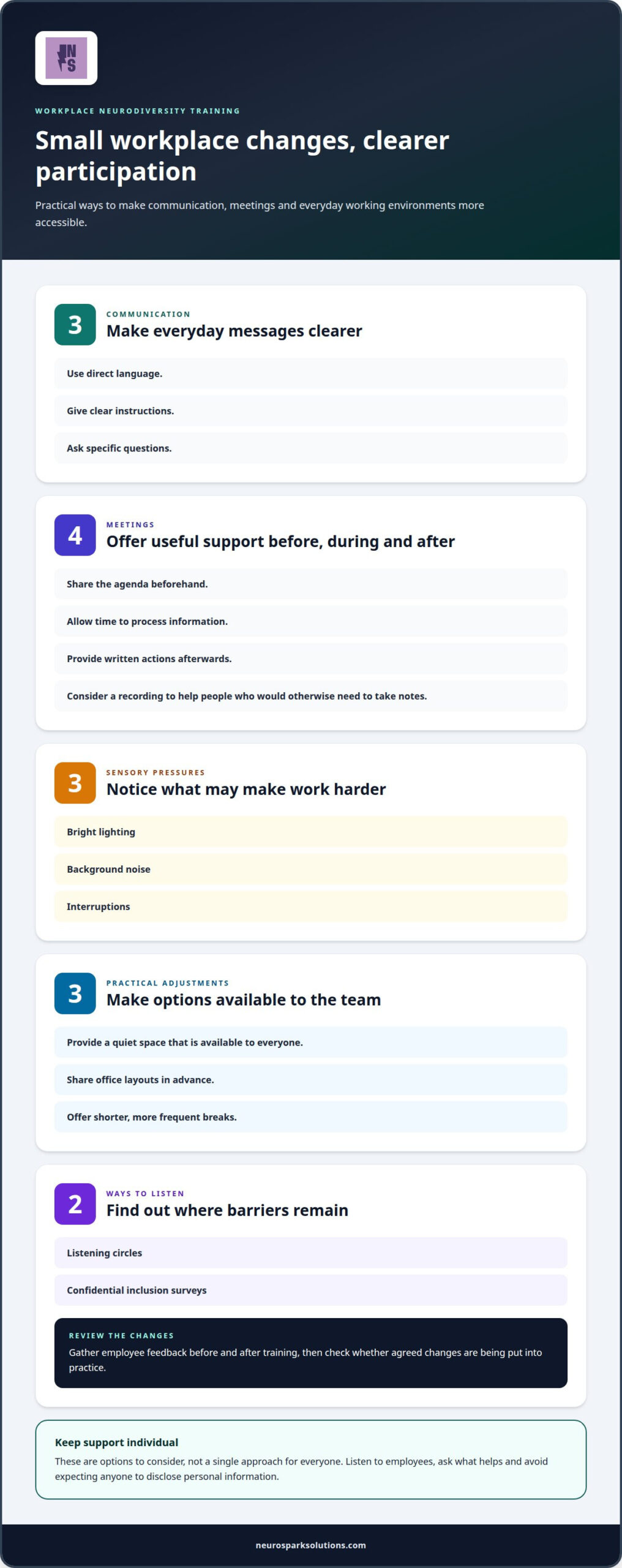
Inclusive communication can start with direct language, clear instructions and specific questions. For meetings, share an agenda beforehand, allow time to process information and provide written actions afterwards. A meeting recording may also help colleagues who would otherwise need to take notes. These steps can make participation easier without requiring anyone to disclose personal information.
Recruitment and onboarding matter too. Use clear role information, explain each stage and share practical details about the workplace in advance. To evaluate training, gather employee feedback before and after, then review whether agreed changes are put into practice. Listening circles and inclusion surveys can surface issues employees may not raise in a group meeting.
Neuro-inclusive work environments
Consider surroundings and routines as well as individual adjustments. Bright lighting, background noise and interruptions may overwhelm some colleagues. A quiet space available to everyone can offer a practical option without singling anyone out. Sharing office layouts in advance and offering shorter, more frequent breaks are other adjustments teams can consider.
Use listening circles or confidential inclusion surveys to ask which barriers affect people’s work. Leaders can review responses alongside feedback on meetings, onboarding and agreed adjustments. This helps identify what supports the workforce and where further action may be useful.
Lived-experience-led workplace training
Lived experience brings real workplace detail into learning. A trainer can explain how unclear priorities, sensory demands or last-minute changes may affect a colleague’s day. Examples like these help managers connect general guidance with situations they recognise. They also show why one person’s needs should not be assumed to represent every neurodivergent colleague. The aim is informed discussion, not asking anyone to speak for a whole group.
Useful training is shaped around the organisation, not delivered as a fixed script. Before a session, identify who will attend and the situations they need to handle, such as team meetings, workload planning or onboarding. The trainer can then use relevant scenarios and practical discussion. Look for clear guidance on reasonable adjustments, communication and follow-up, with space for questions. Lived insight and subject knowledge should work together.
Some people may find rapid verbal instructions difficult to process, noisy spaces uncomfortable or unwritten expectations unclear. A workplace example might follow a new starter through their first team meeting: what information arrives beforehand, how decisions are recorded and who explains the next steps? This makes inclusion concrete and lets managers practise responses without expecting an employee to disclose personal information or provide a training example.
To choose a qualified provider, consider the trainer’s relevant knowledge, lived experience and ability to adapt content to your organisation. Ask how sessions turn discussion into practical actions, and whether managers receive clear guidance they can use afterwards. A useful programme should distinguish shared principles from individual needs, rather than prescribing one adjustment for everyone. If you’re considering a tailored approach, explore workplace training support suited to your team’s needs.
Neurodivergent skills and attributes in the workplace
Manager training helps turn awareness into everyday support. A manager can agree priorities in writing, check that instructions are clear and revisit adjustments when tasks change. Employees may have different communication, sensory or organisational needs, so ask what helps rather than making assumptions. Autism, ADHD and dyslexia can shape someone’s experience, but none determines their abilities or preferred working style.
Skills also vary between individuals. One colleague may spot patterns in complex information; another may bring careful attention to detail, creative problem-solving or deep knowledge of a subject. These attributes are not exclusive to neurodivergent people, and no employee should be expected to demonstrate a particular strength. Managers can make contributions easier to recognise by agreeing clear outcomes and offering accessible ways to share ideas.
Employment rates for disabled and neurodivergent people can provide context for workforce planning, but broad figures do not explain individual experiences. In England, leaders can look beyond recruitment numbers: consider whether application steps are accessible, onboarding gives clear expectations and employees can raise support needs without pressure. Retention, progression and staff feedback can help show where barriers remain.
Consider the Neurodiversity Employers Index alongside a practical review of workplace policies and employee experiences. Use its prompts, where relevant, to identify what your organisation already does and where managers need guidance. Then assign actions, such as clarifying interview instructions or reviewing how adjustments are agreed, and revisit progress with employees.
For a useful review, combine workforce data with lived experience rather than relying on one measure. Ask managers to record agreed actions, then invite employees to share whether those changes help them do their work. Training can help managers listen, avoid assumptions and respond consistently. The goal is not to make everyone work alike, but to help each employee contribute without unnecessary barriers.
Business case for neurodiversity at work
A practical business case connects inclusion with the work your organisation needs to do. For example, a team losing time to unclear handovers can review how information is shared. An employee with dyslexia might benefit from written instructions in a format they can use comfortably. The value is not a claim that every adjustment improves output; it is a clear way to address barriers that affect people’s ability to contribute.
Awareness sessions can help colleagues understand why one working style does not suit everyone, but awareness is only a starting point. Leaders can link a session to business priorities by choosing a workplace challenge, agreeing an action and reviewing what changes afterwards. If meetings often end without clear decisions, try written summaries and ask colleagues whether they help. This makes the business case specific, without relying on broad claims about productivity or innovation.
Build a simple evaluation around information you already collect. Before training, note the issue the organisation wants to address, such as repeated requests for clarification or avoidable onboarding confusion. Afterwards, review whether agreed actions happened and ask employees for feedback. Focus on practical details: what changed, who acted and what employees say now. A listening circle or inclusion survey can add context when numbers alone cannot explain someone’s experience.
Culture matters because a one-off session cannot, by itself, make inclusive practice consistent. Managers need time to apply learning, and employees need a clear route to discuss what works for them. Track actions through regular team reviews, not just attendance records. A useful business case balances operational needs with employee experience, then updates its priorities as the organisation learns. Shape an evidence-led inclusion plan around the outcomes your team wants to improve.
Neuro-Sparks training solutions: Workplace training in Burnley
Neuro-Sparks training solutions delivers workplace training for organisations across the UK, bringing expert guidance to help your team turn neurodiversity awareness into practical ways of working. Flexible training formats are available, and sessions can be tailored to your organisation’s needs, whether you’re supporting managers, reviewing team practices or building shared understanding. Training is led by Dan Armitage, who holds a PG Cert in Neurodiversity and is TAP Accredited.
If you need support beyond team learning, neurodiversity coaching can provide tailored help for individuals. Neurodiversity workplace assessment and Access to Work support for disabled employees can also help address workplace needs. The right next step depends on what your employees and organisation are working through, rather than a one-size-fits-all programme.
Contact Neuro-Sparks training solutions to discuss workplace neurodiversity training for your team.
Make inclusion part of everyday work
Your next step can be small and focused. Choose a workplace situation where clearer understanding could help, then agree what you want managers and colleagues to do differently. This gives workplace neurodiversity training a practical purpose and helps your organisation keep learning beyond a single session.
Neuro-Sparks training solutions can support your next step through workplace training, assessments and HR team support. The team brings relevant neurodiversity training expertise and can help you consider what fits your people and working practices, so inclusion becomes part of how your organisation operates. You do not need every answer before starting; an honest conversation can help clarify what support would be useful.
Contact Neuro-Sparks training solutions to discuss a practical next step for your team. With thoughtful action and continued listening, you can help create a workplace where people are better able to contribute and grow.
Frequently Asked Questions
What is neurodiversity?
Neurodiversity describes the natural variation in how people think, learn, communicate and process information. Autism, ADHD, dyslexia and dyspraxia are examples often discussed in this context. The term does not mean everyone with the same diagnosis has identical needs or strengths. At work, it is useful because it shifts attention towards different ways of functioning, rather than treating one style as the standard.
How do I get started?
Start by identifying a workplace challenge you want to address, such as unclear task handovers or difficulty retaining new starters. Decide who needs to take part, then set a practical outcome, such as clearer role expectations. Invite employees to share what would help without asking anyone to disclose personal information. This gives you a focused starting point for planning learning and follow-up.
Is neurodiversity training available online?
Yes, live online training is available in the UK. Remote sessions can bring colleagues together across different sites, with discussion and workplace scenarios adapted for online participation. Before choosing a format, consider whether attendees need captions, written materials in advance or shorter discussion blocks. These details help make online learning easier to access and take part in.
What types of neuroinclusion training do you offer?
Neuro-Sparks training solutions offers workplace training, assessments and HR team support. Its wider support also includes neurodiversity coaching, Access to Work support and business coaching. The right option depends on your aim: a shared learning session for colleagues, support with workplace needs or guidance for HR. You can focus on one need or discuss how different forms of support fit together.
What topics should workplace neurodiversity training cover?
Useful topics include recognising how workplace practices can create barriers, responding respectfully to disclosure and understanding how support conversations can work. A practical session might explore a new starter’s first month, from receiving instructions to understanding team expectations. Include time for questions and examples relevant to your organisation, so colleagues can connect the learning with decisions they make in their roles.
What are the benefits of neurodiversity training for UK employers and employees?
Training gives employees and managers shared language for discussing workplace needs and expectations. For example, a manager may learn to ask what format helps an employee understand a new task. This can make conversations more constructive and help teams spot barriers sooner. Employers gain a clearer basis for reviewing everyday practices, while employees can take part without being expected to explain neurodiversity on their own.